


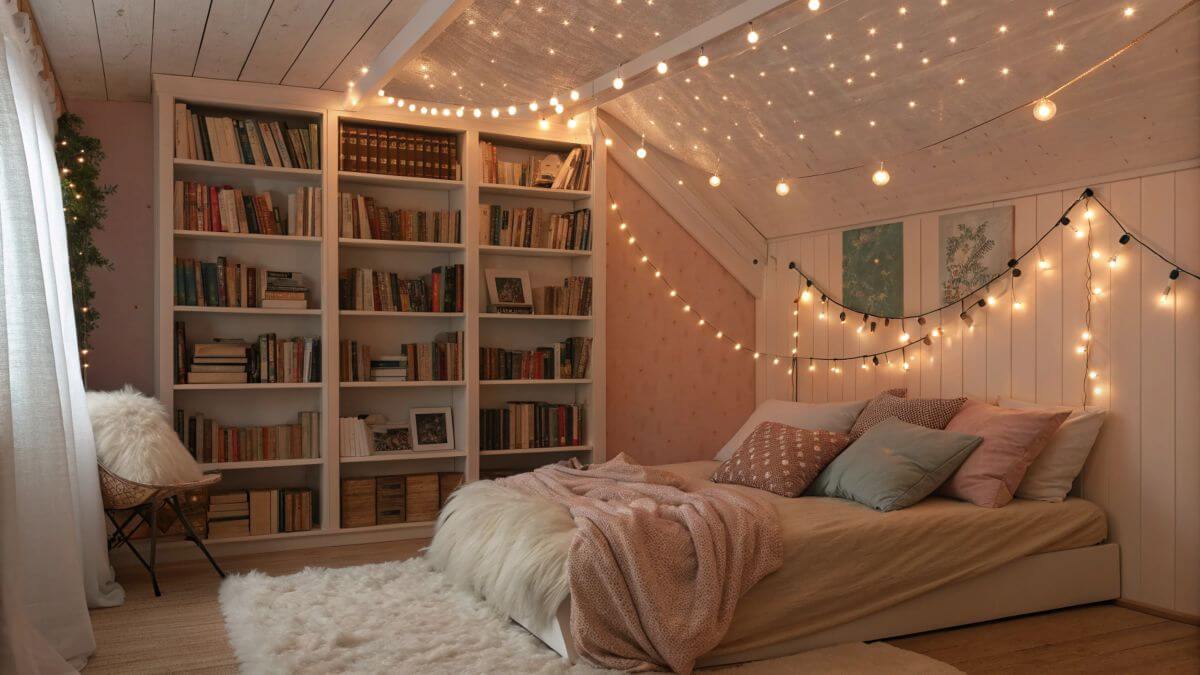
As children grow, their bedroom quietly changes job. It’s no longer just “the place they sleep”. It becomes a space for switching off, doing homework, scrolling, chatting with friends, hiding from siblings, and recovering from busy days.
When the room doesn’t support that shift, you often see it in the most ordinary ways: messy floors that never stay clear, bedtime that feels harder than it should, and a general sense that the space is working against them.
The reassuring bit is this: calm bedrooms aren’t about perfect styling. They’re built from a few practical foundations; space, light, comfort and routines that actually work in real life.

Why calm matters more as kids get older
For younger children, sleep can be disrupted by obvious things: teething, nightmares, illness, growth spurts. For older children and teens, the causes can become less visible:
- busy school days and social pressures
- exam stress
- screens and notifications
- feeling overwhelmed by clutter
- not having a clear place to study or unwind
A calm bedroom won’t solve everything, but it can reduce friction. It’s one of the few parts of their day where you can create a space that feels predictable and supportive.
If you’re approaching SATs/GCSEs or a heavy assessment period, it can help to revisit your site’s broader support advice too: Essential Advice for Supporting Your Child Through Exam Seasons.
Step one: make the room feel physically easier to be in
A bedroom feels calmer when movement is easy. If your child has to step around “stuff” just to get to the wardrobe, their brain reads the space as busy.
A simple, parent-friendly goal:
Keep one clear walkway from the door to the bed and the main storage.
That may mean:
- pushing the bed against one wall in a smaller room
- reducing bulky furniture
- moving a chair or basket that’s become a trip hazard
- keeping surfaces (especially bedside tables) uncluttered
This is also why bed choice matters: it’s the biggest object in the room and sets the tone.
If you’re at the stage where a single bed no longer feels comfortable (growth spurt, sleepovers, “too small” complaints) a small double is often a sensible upgrade in UK bedrooms. Our guide covers ages, layout ideas, measuring tips and shared-room considerations: Small Double Beds for Kids and Teens: The Smart UK Bedroom Upgrade.
Step two: reduce “visual noise” (the fastest calm-maker)
Visual noise is anything the eye keeps snagging on: piles, open shelves overflowing, too many small objects, clothes on chairs, random chargers, half-finished projects.
In a calm bedroom, most mess is either:
- put away, or
- contained in one predictable place
Try these low-effort fixes:
- a single “daily dump” basket for items that don’t have a home yet
- under-bed storage for bedding, sports kit or seasonal clothes
- hooks behind the door for school bags and hoodies
- one drawer unit rather than multiple small boxes
If your child struggles with organisation, keep categories simple:
- school
- clothes
- “stuff”
- laundry
It’s more realistic than expecting perfect systems.
Step three: choose comfort upgrades that actually affect sleep
A calm room is partly emotional, but it’s also practical. These changes tend to matter most:
Lighting
- Use warm, softer light in the evening (a bedside lamp helps)
- Avoid harsh overhead lighting right before bed
- If they read at night, a directional light prevents “full room brightness”
Temperature and bedding
- Overheating is a common sleep disruptor
- Layer bedding so they can adjust easily
- Keep a spare blanket nearby rather than turning the heating up
Noise and privacy
- If the room is shared or noisy, consider a white noise app or a small fan
- A simple curtain upgrade can soften sound and make the room feel more enclosed
None of this needs to be expensive, it just needs to be consistent.
Step four: build a “decompression corner” (especially for teens)
Not every bedroom has space for a separate seating area, but most can support a small “calm corner”.
It can be:
- the bed with extra cushions, or
- a small chair by the window, or
- a floor cushion and a lamp in a corner
The point is to signal: this is where you switch off. That’s increasingly important as children get older and spend more of their day “on”.
Step five: make the room support healthy routines (not perfection)
Parents often blame themselves for bedtime chaos, but a big part of it is simply routines competing with real life: homework, phones, tiredness, sibling noise, and a room that doesn’t help.
A calm bedroom supports routines when it:
- has a clear place for phone charging (or even better not in the room)
- has a spot for homework supplies
- has predictable storage (so the floor doesn’t become the default)
- feels comfortable enough to spend time in
If hydration is something you’re working on too (particularly with older children who “forget” to drink), your older post is a useful companion read: How Much Water Does Your Child Really Need Each Day?
It’s not that water “fixes” sleep, but dehydration and headaches can make tiredness and irritability worse, and parents often end up dealing with the knock-on effects.

Small changes that make a big difference (a simple checklist)
If you want a quick plan you can implement in one weekend, start here:
Friday: reset the space
- clear the floor
- remove “dead clutter” (broken toys, outgrown items)
- gather everything that doesn’t belong and relocate it
Saturday: fix layout + storage
- protect a clear walkway
- create one storage zone for school/laundry
- add hooks or a basket for daily items
Sunday: comfort + calm
- add a warm lamp
- simplify bedside surfaces
- layer bedding (throw + breathable base)
- choose one “grown-up” decor element (print, pinboard, plant)
It’s not about a perfect room, it’s about a room that works.
A note for parents: calm rooms support your mental load too
When a child’s bedroom is constantly chaotic, it becomes another thing you carry, mentally and practically. If you’re already juggling work, family life and everything else, it’s normal to feel drained by the constant “tidy your room” loop.
This is where reducing friction matters. A calmer bedroom often means fewer daily battles, fewer frantic mornings, and fewer evening overwhelm moments.
If you need wider support (because sometimes it’s not just the room), your older post is still relevant: Looking after your mental health.
The takeaway
A calm bedroom for growing kids isn’t about expensive makeovers. It’s about:
- space to move
- less visual clutter
- comfortable lighting and bedding
- simple routines supported by the room
Start with layout and storage, then add softness and comfort. If the bed is part of the problem (too small, uncomfortable, or limiting the room’s flow) you’ll often get the biggest improvement by upgrading that first.


